Namadwaar Singapore: Supporting SingaRangoli 2026 through Voluntary Contributions
Volunteers from Singapore Namadwaar participated in the ‘World Rangoli Flower Carpet – Singapore 2026’ program. This program was an iconic confluence of East and West traditions and was held for the very first time in Singapore at the Singapore Chinese Cultural Center from 5th February to 8th February 2026. Members of Namadwaar Singapore volunteered for the event across all three days.
About the Program:
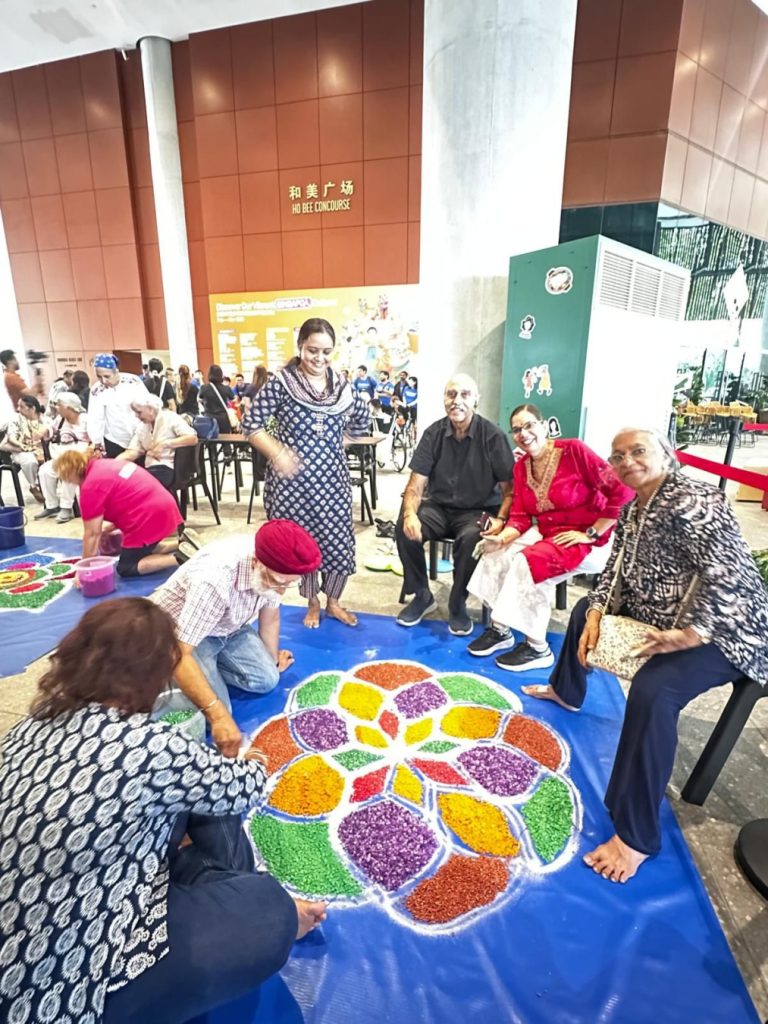
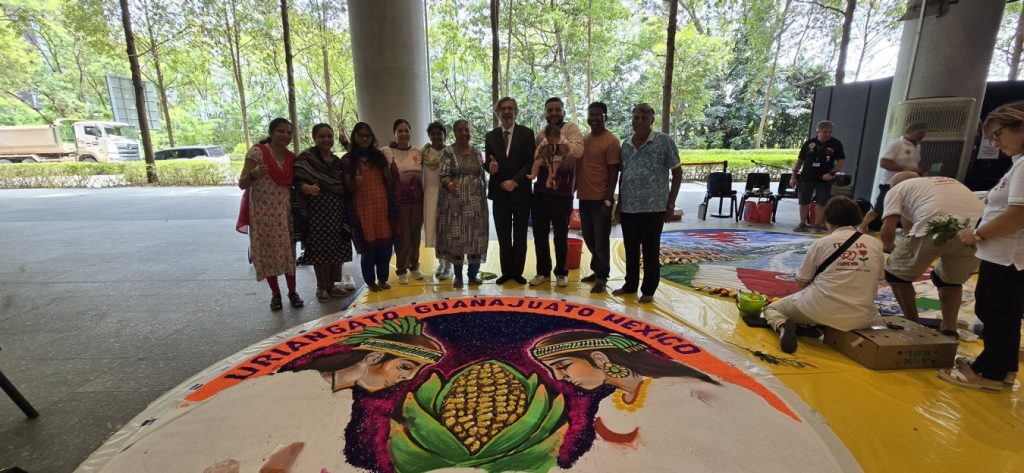
This program was organized by the SingaRangoli organization, supported by its international partner, CIDAE (Coordinadora Internacional de Entidades de Alfambristas de Arte Efimoro, based in Spain). More than 30 flower carpet artistes from Spain, Italy, Mexico, Japan, Malaysia, and India joined hands with Singapore rangoli artists during this event to create intricate rangoli, Italian ‘Infioratas’, Spanish ‘Catifa de Flors’, Mexican ‘Alfombras’, and Japanese ‘Hanae’. The program was highly interactive, where various organizations in Singapore were invited to participate in creating colorful rangolis.
About ‘SingaRangoli’ and Mrs. Vijaya Mohan
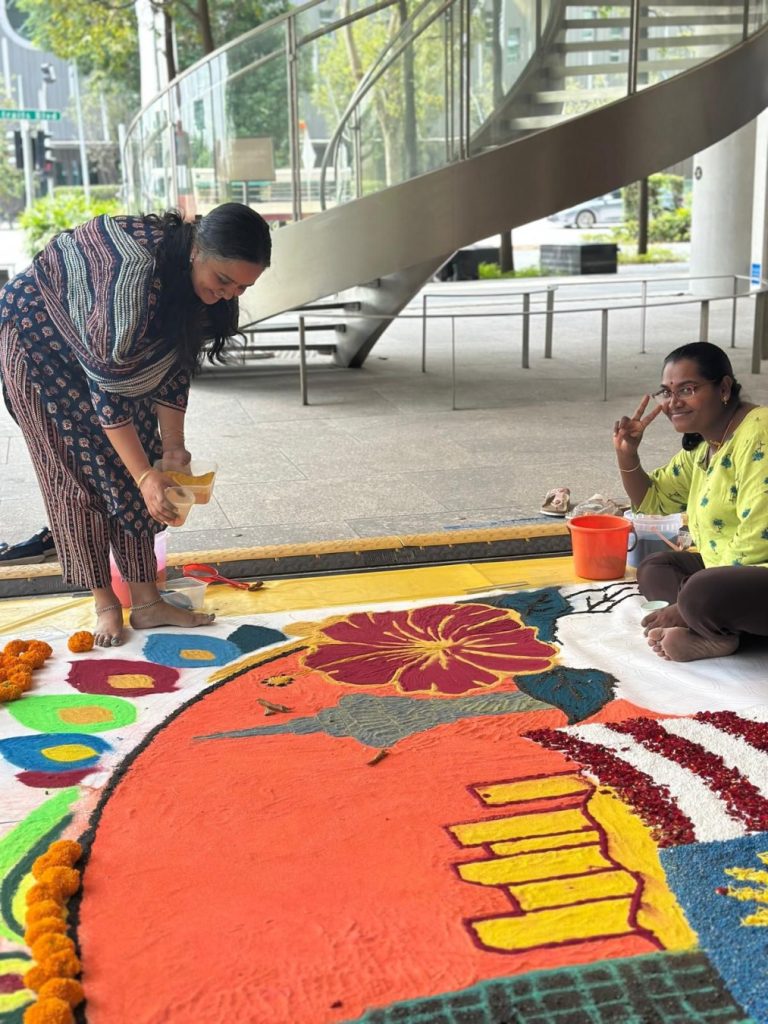
SingaRangoli is a unique adaptation of the traditional Indian art form of Rangoli, specifically developed in Singapore by artist Vijaya Mohan ji. This art form blends traditional drawing techniques with contemporary materials and approaches, creating intricate designs on a range of surfaces beyond the conventional ground. Vijaya Mohan ji, the creator of SingaRangoli, is recognized for her efforts to promote this ancient art in new and innovative ways, holding a Guinness World Record for the largest Rangoli and numerous Singaporean records in various categories. Vijaya Mohan ji’s work highlights the potential for traditional arts to evolve and remain relevant in modern contexts. SingaRangoli serves as an example of how individuals can promote cultural heritage through creative adaptation and widespread engagement.
Namadwaar Singapore- Contributions and Learnings
It was an enriching experience for the volunteers to witness the sheer creativity and passion of artists and the public in an activity that upholds traditions and fosters unity across diverse cultures.
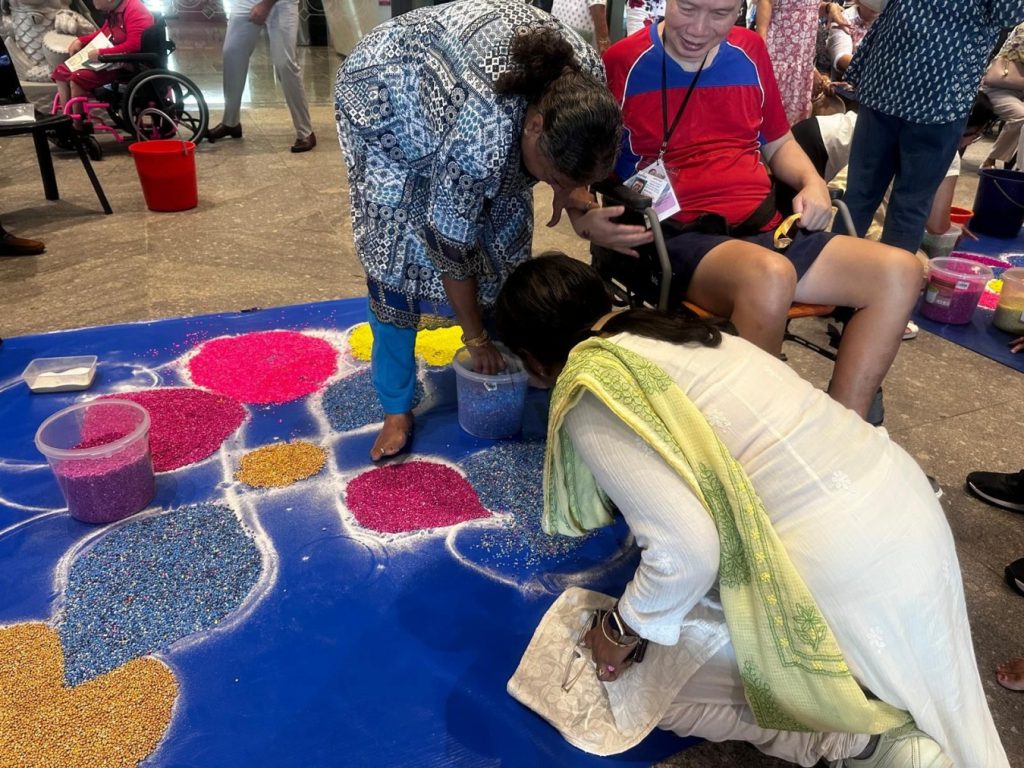
They guided the public in understanding the art forms, assisted various artists with color filling, helped the coordinators with their operational tasks, and drew rangolis for participating guests to fill with color.
The extent of recycling, sustainable practices, time management, adaptation of age-old art forms to current ethos, and innovation with modern materials were wonderful. But more importantly, the joy of artistic creation by experts and members of the public alike, especially by children, ageing members of society, differently abled friends, and those seeing these art forms for the first time were remarkable.